Similes for personality traits help you describe how people behave, think, and interact with others. You can compare a kind person to a warm blanket, a brave person to a lion, or a curious person to a child exploring a new world. These comparisons make character descriptions more vivid and easier to understand.
Whether you’re writing a school assignment, developing a fictional character, or improving your descriptive writing, the right simile can communicate a personality trait in just a few words. This collection includes 45 similes for positive, negative, and complex personality traits, with clear meanings and example sentences to help you choose the most suitable comparison.
What Is a Simile for a Personality Trait?
A simile for a personality trait compares someone’s character or behavior to something familiar, usually using the words like or as. It helps readers picture a person’s qualities instead of simply reading a list of adjectives.
For example, saying “She is as patient as a gardener” suggests that she gives people time to grow and learn. Similarly, “He guards his secrets like a locked chest” describes someone who is private and reluctant to share personal information.
The best personality similes reveal more than a basic quality. They can also suggest how a person acts, how others experience them, and whether their behavior is admirable, difficult, or somewhere in between.
Positive Similes for Personality Traits
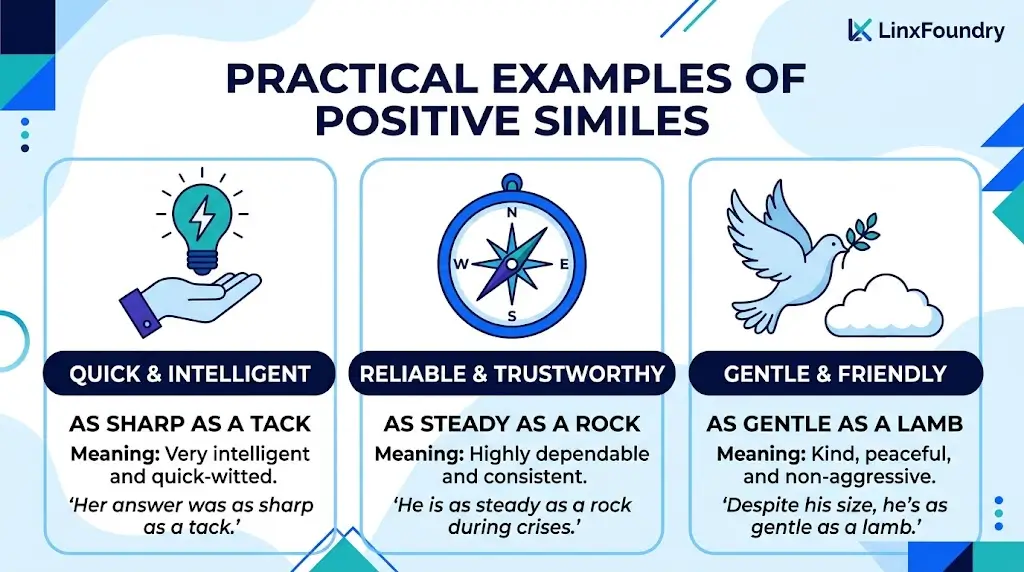
These comparisons describe admirable qualities such as kindness, honesty, confidence, patience, and generosity.
1. As kind as a warm blanket
Meaning: Someone who makes others feel comfortable, safe, and cared for.
Why it works: A warm blanket provides comfort, just as a kind person offers emotional support.
Example: Whenever her classmates felt nervous, Maya was as kind as a warm blanket.
2. As brave as a lion
Meaning: Someone who faces danger, difficulty, or uncertainty with courage.
Why it works: Lions are commonly associated with strength and courage, making this a familiar comparison for bravery.
Example: Although he feared public speaking, Daniel was as brave as a lion when he presented his project.
3. As honest as a clear window
Meaning: Someone who is open, truthful, and straightforward.
Why it works: A clear window allows people to see through it, reflecting a personality that hides little and communicates honestly.
Example: You can trust Olivia because she is as honest as a clear window.
4. As patient as a gardener
Meaning: Someone who understands that progress takes time and does not rush others unnecessarily.
Why it works: A gardener must wait for seeds to grow, just as a patient person allows others to learn at their own pace.
Example: Our teacher was as patient as a gardener when helping us understand difficult grammar rules.
5. As generous as a flowing river
Meaning: Someone who gives freely and consistently to others.
Why it works: A flowing river continually supplies water, creating an image of generosity that keeps reaching beyond oneself.
Example: My grandmother was as generous as a flowing river, always sharing her time and resources with neighbors.
6. As loyal as a faithful dog
Meaning: Someone who remains dependable and supportive through difficult circumstances.
Why it works: A faithful dog is a familiar symbol of companionship and loyalty.
Example: Even when the team faced criticism, Marcus remained as loyal as a faithful dog.
7. As calm as a still lake
Meaning: Someone who remains composed rather than reacting impulsively.
Why it works: The still surface of a lake suggests quietness and emotional steadiness.
Example: While everyone else panicked about the delayed flight, Nina was as calm as a still lake.
8. As humble as a wildflower
Meaning: Someone who has good qualities but does not constantly seek attention or praise.
Why it works: A wildflower can be beautiful without demanding recognition, much like a humble person.
Example: Despite winning several awards, the young scientist remained as humble as a wildflower.
9. As dependable as a lighthouse
Meaning: Someone others can rely on for guidance and support.
Why it works: A lighthouse provides a steady point of reference for ships, reflecting the reliability of a trustworthy person.
Example: During difficult family decisions, Uncle James was as dependable as a lighthouse.
10. As curious as a cat
Meaning: Someone who wants to explore, investigate, and discover new things.
Why it works: Cats are known for investigating unfamiliar places and objects, making them a recognizable comparison for curiosity.
Example: As curious as a cat, Sophie asked questions about every experiment in the science laboratory.
Similes for Confident and Determined Personalities
These similes describe people who believe in themselves, persist through challenges, and take action toward their goals.
11. As confident as a seasoned performer
Meaning: Someone who trusts their abilities and feels comfortable in front of others.
Why it works: An experienced performer knows how to handle an audience, suggesting confidence developed through practice.
Example: After months of preparation, Aisha walked onto the stage as confident as a seasoned performer.
12. As determined as a climbing vine
Meaning: Someone who continues moving toward a goal despite obstacles.
Why it works: A climbing vine keeps growing upward while working its way around whatever blocks its path.
Example: Determined as a climbing vine, Ethan continued studying until he passed the examination.
13. As bold as a streak of lightning
Meaning: Someone who acts with remarkable confidence and little hesitation.
Why it works: Lightning appears suddenly and powerfully, creating an image of decisive action.
Example: As bold as a streak of lightning, Zara volunteered to lead the unfamiliar project.
14. As stubborn as a mule
Meaning: Someone who refuses to change their mind or give up their position easily.
Why it works: This familiar comparison emphasizes resistance to persuasion.
Example: My brother is as stubborn as a mule when he believes his football team deserves another chance.
Usage note: Stubbornness can suggest determination, but it usually carries a negative tone when someone refuses to consider reasonable advice.
15. As persistent as a dripping tap
Meaning: Someone who continues repeating an action or pursuing a goal without stopping easily.
Why it works: A dripping tap keeps producing drops, creating an image of steady, repeated effort.
Example: Persistent as a dripping tap, Lena kept practicing the piano until she mastered the difficult passage.
16. As independent as a wild horse
Meaning: Someone who prefers making decisions and managing responsibilities without relying heavily on others.
Why it works: A wild horse suggests freedom and a strong preference for choosing its own direction.
Example: As independent as a wild horse, Ben planned his own journey across the country.
17. As focused as an archer
Meaning: Someone who concentrates carefully on a specific goal.
Why it works: An archer must pay attention to the target and control distractions before releasing an arrow.
Example: As focused as an archer, Priya ignored the noise around her and finished the competition task.
Similes for Shy, Quiet, and Introverted Personalities
These comparisons describe people who are reserved, thoughtful, cautious, or uncomfortable in unfamiliar social situations.
18. As shy as a fawn
Meaning: Someone who appears timid or hesitant, particularly around unfamiliar people.
Why it works: A young deer is often imagined as cautious when approaching something unfamiliar.
Example: As shy as a fawn, Ella stood near the doorway until someone invited her into the conversation.
19. As quiet as falling snow
Meaning: Someone who speaks softly or rarely draws attention to themselves.
Why it works: Falling snow often creates an impression of silence and stillness.
Example: As quiet as falling snow, Amir listened carefully while his classmates discussed their ideas.
20. As reserved as a closed journal
Meaning: Someone who keeps personal thoughts and feelings private.
Why it works: A closed journal contains information that others cannot read without permission, reflecting a private personality.
Example: Reserved as a closed journal, Hannah rarely discussed her personal problems with coworkers.
21. As cautious as a turtle
Meaning: Someone who approaches unfamiliar situations carefully and avoids unnecessary risks.
Why it works: A turtle’s protective shell suggests a preference for safety.
Example: As cautious as a turtle, Oliver checked every detail before agreeing to the business proposal.
22. As thoughtful as a quiet library
Meaning: Someone who spends time reflecting before speaking or acting.
Why it works: A quiet library suggests concentration, reflection, and careful consideration.
Example: As thoughtful as a quiet library, Grace considered everyone’s feelings before giving her opinion.
23. As watchful as an owl
Meaning: Someone who observes their surroundings carefully and notices details others might miss.
Why it works: Owls are associated with attentive observation, making them useful symbols of awareness.
Example: As watchful as an owl, the new student noticed the small changes in everyone’s behavior.
Similes for Funny, Playful, and Outgoing Personalities
These comparisons work well when describing energetic friends, entertaining characters, sociable classmates, and people who bring humor into everyday situations.
24. As playful as a puppy
Meaning: Someone who enjoys games, jokes, and lighthearted activities.
Why it works: A puppy’s enthusiasm for play creates a familiar image of cheerful behavior.
Example: As playful as a puppy, Noah turned an ordinary afternoon into an exciting game.
25. As cheerful as a morning songbird
Meaning: Someone who expresses happiness through an upbeat attitude.
Why it works: A songbird’s cheerful sounds suggest a positive and lively personality.
Example: As cheerful as a morning songbird, Lily greeted everyone with a smile.
26. As talkative as a radio host
Meaning: Someone who speaks frequently and enjoys keeping conversations going.
Why it works: A radio host fills the air with words, much like someone who always has something to say.
Example: As talkative as a radio host, Jake entertained the entire bus with stories from his weekend.
27. As lively as a carnival
Meaning: Someone who brings energy, excitement, and activity into a group.
Why it works: A carnival is filled with movement, noise, and entertainment, reflecting an energetic personality.
Example: As lively as a carnival, Mia made the family gathering exciting from beginning to end.
28. As mischievous as a fox
Meaning: Someone who enjoys clever tricks, playful trouble, or harmless schemes.
Why it works: A fox is traditionally associated with cleverness and cunning.
Example: As mischievous as a fox, Oliver hid his sister’s birthday present and left clues for her to find it.
29. As sociable as a garden gathering
Meaning: Someone who enjoys meeting people and joining conversations.
Why it works: A gathering in a garden suggests a welcoming environment where people connect and talk.
Example: As sociable as a garden gathering, Elena introduced herself to everyone at the conference.
30. As energetic as a bouncing ball
Meaning: Someone who seems full of energy and is always ready for another activity.
Why it works: A bouncing ball repeatedly springs into motion, suggesting enthusiasm and movement.
Example: As energetic as a bouncing ball, Ryan was ready to play another game after everyone else needed a break.
Similes for Negative or Difficult Personality Traits
Not every personality trait is positive. These comparisons can help writers describe arrogance, impatience, irritability, secrecy, and other challenging behaviors without relying on vague labels.
31. As arrogant as a peacock
Meaning: Someone who displays excessive pride and believes they are more important than others.
Why it works: A peacock’s elaborate display creates a recognizable image of someone seeking admiration.
Example: As arrogant as a peacock, Victor dismissed his teammates’ suggestions without listening.
32. As impatient as a ticking clock
Meaning: Someone who becomes frustrated when they have to wait.
Why it works: A ticking clock emphasizes the passage of time, reflecting a person’s strong desire for things to happen quickly.
Example: As impatient as a ticking clock, Max checked the door every minute while waiting for his friends.
33. As irritable as a cat in the rain
Meaning: Someone who becomes annoyed easily, particularly when uncomfortable or inconvenienced.
Why it works: The image suggests a creature that is unhappy with its circumstances and quick to show displeasure.
Example: After a sleepless night, Daniel was as irritable as a cat in the rain.
34. As secretive as a locked diary
Meaning: Someone who carefully hides personal information or intentions.
Why it works: A locked diary represents thoughts that remain inaccessible to others.
Example: As secretive as a locked diary, Rachel refused to reveal what she had planned for the celebration.
35. As boastful as a town crier
Meaning: Someone who constantly announces achievements or tries to attract attention through self-praise.
Why it works: The image of someone loudly announcing information reflects a person who wants others to notice their accomplishments.
Example: As boastful as a town crier, Nathan reminded everyone about his award at every opportunity.
36. As indecisive as a compass in a storm
Meaning: Someone who struggles to choose a direction or make a decision.
Why it works: A compass suggests direction, while a storm creates an image of confusion and difficulty navigating.
Example: As indecisive as a compass in a storm, Emily changed her mind several times before choosing a college.
37. As forgetful as a sieve
Meaning: Someone who frequently forgets information, appointments, or everyday responsibilities.
Why it works: A sieve has holes through which small things pass, creating an image of information that does not stay in memory.
Example: As forgetful as a sieve, Peter left his notebook at home for the third time that week.
Similes for Complex and Thoughtful Personalities
Some people cannot be described with one simple adjective. These comparisons are useful for characters who are emotionally sensitive, observant, unpredictable, or difficult to understand.
38. As sensitive as a flower in the wind
Meaning: Someone who is deeply affected by words, emotions, or changes in their surroundings.
Why it works: A delicate flower moves with the wind, suggesting a person who responds strongly to subtle experiences.
Example: As sensitive as a flower in the wind, Isabelle noticed the disappointment in her friend’s voice immediately.
39. As unpredictable as the weather
Meaning: Someone whose moods or reactions change unexpectedly.
Why it works: Weather can shift from sunshine to rain, creating an image of behavior that is difficult to anticipate.
Example: As unpredictable as the weather, Jordan could be cheerful one moment and unusually quiet the next.
40. As mysterious as a moonlit forest
Meaning: Someone whose personality is difficult to understand completely.
Why it works: A forest illuminated by moonlight reveals some details while leaving others hidden, suggesting a person with an intriguing or private character.
Example: As mysterious as a moonlit forest, Adrian rarely explained the reasons behind his unusual decisions.
41. As observant as a detective
Meaning: Someone who notices small details and uses them to understand situations.
Why it works: Detectives are associated with gathering clues and paying close attention to evidence.
Example: As observant as a detective, Chloe realized that her friend was upset before anyone else noticed.
42. As adaptable as a chameleon
Meaning: Someone who adjusts their behavior or approach to suit different situations.
Why it works: A chameleon’s ability to change color provides a familiar image of adaptation.
Example: As adaptable as a chameleon, Marcus worked comfortably with different teams and communication styles.
43. As empathetic as a listening friend
Meaning: Someone who tries to understand and share another person’s feelings.
Why it works: A good listener offers attention and understanding rather than immediately judging or dismissing someone else’s experience.
Example: As empathetic as a listening friend, Nadia gave her classmate time to explain what was troubling her.
44. As competitive as a racehorse
Meaning: Someone who strongly wants to win or perform better than others.
Why it works: A racehorse is associated with competition, speed, and the drive to reach the finish line first.
Example: As competitive as a racehorse, Ethan practiced every day before the school athletics championship.
45. As independent as a lone mountain
Meaning: Someone who stands firmly on their own and does not need constant approval from others.
Why it works: A mountain standing apart from its surroundings creates an image of strength and self-reliance.
Example: As independent as a lone mountain, Sophia trusted her judgment even when her friends disagreed with her choices.
Quick-Reference Table of Personality Similes
Use this table to find a comparison that matches the personality you want to describe.
| Simile | Personality Trait | Best Used For |
|---|---|---|
| As kind as a warm blanket | Kindness | Caring characters |
| As brave as a lion | Courage | Heroes and determined people |
| As honest as a clear window | Honesty | Trustworthy characters |
| As patient as a gardener | Patience | Teachers and mentors |
| As curious as a cat | Curiosity | Explorers and students |
| As calm as a still lake | Calmness | Composed personalities |
| As shy as a fawn | Shyness | Reserved characters |
| As playful as a puppy | Playfulness | Children and cheerful friends |
| As arrogant as a peacock | Arrogance | Proud or boastful characters |
| As stubborn as a mule | Stubbornness | Uncompromising personalities |
| As unpredictable as the weather | Unpredictability | Changeable characters |
| As observant as a detective | Awareness | Investigators and thoughtful people |
| As adaptable as a chameleon | Adaptability | Flexible personalities |
| As empathetic as a listening friend | Empathy | Caring and understanding people |
| As competitive as a racehorse | Competitiveness | Athletes and ambitious characters |
How to Use Similes for Personality Traits in Writing
A personality simile works best when it reveals something meaningful about a person. Instead of adding a comparison simply to make a sentence sound interesting, choose one that fits the character’s behavior and the tone of your writing.

1. Show the Trait Through Behavior
Rather than telling readers that a character is patient, demonstrate the quality through an action.
Basic sentence: Sarah was patient with her younger brother.
Improved sentence: Sarah was as patient as a gardener, helping her younger brother tie his shoes without rushing him.
The second sentence makes the trait easier to picture because it connects patience with a recognizable activity.
2. Match the Simile to the Situation
The same person may show different personality traits in different situations. Choose a comparison that reflects the behavior you want readers to notice.
For example:
- Courage: He stood as brave as a lion when he defended his friend.
- Shyness: He stood as shy as a fawn when introduced to the new class.
- Determination: He worked as determined as a climbing vine to complete the difficult assignment.
Each comparison emphasizes a different response to a challenge.
3. Choose a Tone That Fits the Character
Positive, negative, and neutral comparisons create different impressions.
Calling someone “as confident as a seasoned performer” suggests competence and self-assurance. Describing that person as “as arrogant as a peacock” suggests that their confidence has become excessive.
Likewise, “as cautious as a turtle” may describe sensible decision-making, while a more critical context could portray the same behavior as excessive hesitation.
Think about whether you want readers to admire, question, understand, or laugh at the character.
4. Avoid Using Too Many Similes Together
Several comparisons in one sentence can distract readers from the main idea.
Overloaded: She was as brave as a lion, as quick as lightning, as strong as an ox, and as clever as a fox.
More effective: She was as brave as a lion, stepping forward when everyone else hesitated.
One well-chosen comparison, supported by meaningful action, often creates a stronger impression.
5. Use Similes to Build Distinct Characters
When writing fiction, give different characters different comparisons that reflect their personalities.
For example, a patient teacher might be “as patient as a gardener,” while a curious student might be “as curious as a cat.” A secretive character could be “as secretive as a locked diary.”
These details help readers distinguish the characters without repeatedly using basic adjectives.
Similes Using “Like” to Describe Personality
Similes can also use like to compare a person’s behavior or character with something familiar.
Here are a few examples:
- He protects his friends like a shield protects a warrior. This describes a protective and loyal personality.
- She collects questions like a child collecting seashells. This suggests curiosity and enthusiasm for learning.
- He approaches new challenges like a climber facing a steep mountain. This conveys courage and determination.
- She listens like a quiet room waiting for a story. This creates an image of patience and attentive listening.
- He guards his secrets like a keeper guards a treasure. This describes someone who is private and protective of personal information.
These comparisons are particularly useful in stories and descriptive paragraphs because they show how someone behaves instead of simply labeling their character.
Frequently Asked Questions
What is a good simile for personality?
A good simile for personality compares a person’s character or behavior to something familiar. For example, “as kind as a warm blanket” describes a caring person, while “as curious as a cat” describes someone who enjoys exploring and asking questions.
What is a simile for a kind person?
“As kind as a warm blanket” is a useful simile for someone who makes others feel comfortable and supported. For example, “Her grandmother was as kind as a warm blanket, welcoming everyone who visited.”
What is a simile for a confident person?
“As confident as a seasoned performer” describes someone who trusts their abilities and feels comfortable handling challenges. For example, “As confident as a seasoned performer, Maya presented her ideas to the entire company.”
What is a simile for a shy person?
“As shy as a fawn” describes someone who feels nervous or hesitant around unfamiliar people. For example, “As shy as a fawn, Oliver waited for someone to start the conversation.”
What is a simile for a stubborn personality?
“As stubborn as a mule” describes someone who refuses to change their mind easily. For example, “As stubborn as a mule, Jake refused to consider another solution.” The expression usually has a negative tone.
How do you write a simile about someone’s personality?
First, identify the personality trait you want to describe, such as kindness, courage, curiosity, or impatience. Next, choose a familiar object, animal, or situation that communicates the trait clearly. Connect the two using “like” or “as,” and place the comparison in a natural sentence.
For example, you could describe a curious student as “as curious as a cat exploring an unfamiliar room.”
Final Thoughts
Similes for personality traits make character descriptions more vivid by connecting human qualities with familiar images. Comparisons such as “as brave as a lion,” “as calm as a still lake,” and “as curious as a cat” help readers understand a person’s behavior quickly. More imaginative expressions can also give fictional characters a distinctive voice.
When choosing a simile, consider the personality trait, the situation, and the impression you want to create. A positive comparison can highlight someone’s strengths, while a more critical one can reveal a character’s flaws. You can even create your own similes by observing everyday behavior and connecting it with an image that captures the same quality.

Emily Carter
Emily Carter specializes in word choice, writing clarity, vocabulary development, and practical English usage. Her articles explain similar words, highlight differences in meaning, and provide examples to help readers communicate more naturally and confidently.