Similes for feeling trapped help describe the frustration, fear, helplessness, or pressure of being unable to escape a situation. You might feel like a bird in a cage, a fly caught in a web, or a person stuck in quicksand. These comparisons make difficult emotions easier to picture and understand. They can also describe someone trapped by expectations, responsibilities, difficult relationships, or their own thoughts. Below, you’ll find 30 similes for feeling trapped, including simple expressions, creative comparisons, and powerful examples for stories, poems, and descriptive writing. Each simile includes its meaning and an example sentence to help you choose the right expression for your situation.
Quick Answer: What Is a Simile for Feeling Trapped?
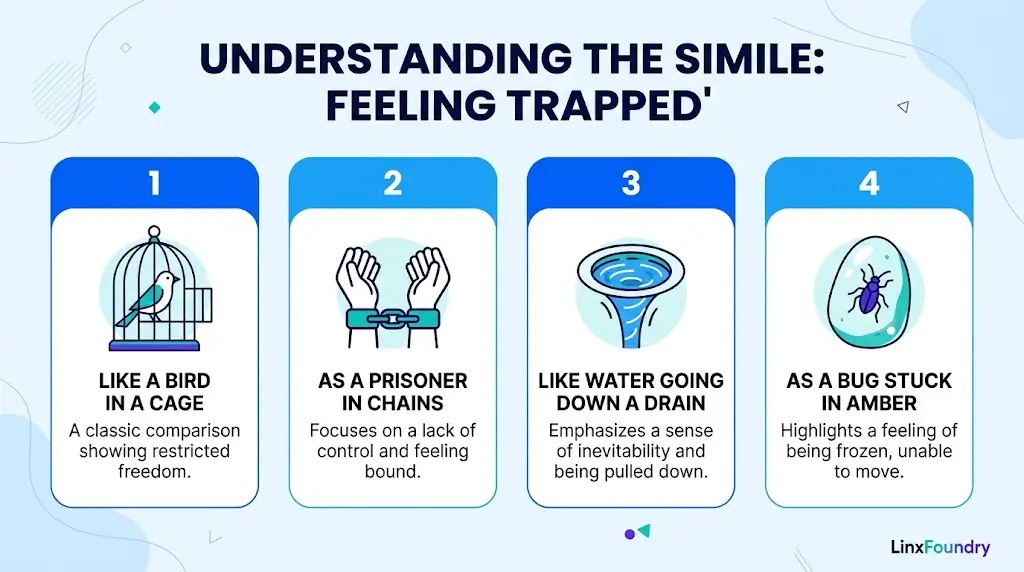
A good simile for feeling trapped is “like a bird in a cage.” It describes someone who longs for freedom but cannot escape their restrictions. Other useful comparisons include being like a fly caught in a web, a person stuck in quicksand, or a prisoner behind invisible walls. These similes can describe physical confinement as well as emotional pressure, limited choices, and situations that seem impossible to leave.
30 Similes for Feeling Trapped
These comparisons explore different kinds of confinement, from physical restrictions to emotional struggles and the feeling of having no way forward.
Simple Similes for Feeling Trapped
These familiar, easy-to-understand similes work well in school assignments, everyday descriptions, and straightforward storytelling.
1. Like a bird in a cage
Meaning: Feeling restricted and unable to enjoy freedom.
Why it works: A caged bird can see the world beyond its enclosure but cannot reach it.
Example: She felt like a bird in a cage, watching opportunities pass by while her family made every decision for her.
2. Like a fly caught in a web
Meaning: Feeling stuck in a situation that becomes increasingly difficult to escape.
Why it works: The more a fly struggles in a spider’s web, the more entangled it can become.
Example: He felt like a fly caught in a web of lies, unsure which truth might help him get free.
3. Like a prisoner behind bars
Meaning: Feeling confined by rules, circumstances, or another person’s control.
Why it works: Prison bars represent a clear boundary between confinement and freedom.
Example: With every decision controlled by someone else, she felt like a prisoner behind bars.
4. Like a fish in a net
Meaning: Feeling caught with very few options for escape.
Why it works: A net surrounds its catch and limits movement.
Example: Once the deadline passed, I felt like a fish in a net, unable to change my decision.
5. Like a mouse in a maze
Meaning: Feeling lost while searching for a way out.
Why it works: A maze has confusing paths that make the exit difficult to find.
Example: He wandered through endless paperwork like a mouse in a maze, searching for a solution that never seemed to appear.
6. Like a person locked in a room
Meaning: Feeling isolated or restricted, with no obvious way to leave.
Why it works: A locked room creates a strong image of limited movement and choice.
Example: Surrounded by expectations he could not meet, Daniel felt like a person locked in a room without a key.
Creative Similes for Feeling Trapped
Use these more imaginative comparisons when you want to communicate frustration, uncertainty, or an exhausting struggle in a distinctive way.
7. Like a fly trapped inside a glass jar
Meaning: Feeling able to see freedom but unable to reach it.
Why it works: The transparent barrier makes escape seem close, even when it remains out of reach.
Example: She felt like a fly trapped inside a glass jar, watching the life she wanted unfold just beyond her reach.
8. Like a car spinning its wheels in mud
Meaning: Making an effort without making progress.
Why it works: The wheels keep turning, but the car remains stuck.
Example: Despite working late every night, I felt like a car spinning its wheels in mud.
9. Like a keyless lock
Meaning: Feeling that a solution exists but that you lack what you need to find it.
Why it works: A lock suggests that an opening is possible, yet the missing key prevents access.
Example: He felt like a keyless lock, knowing his life could change but having no idea how to begin.
10. Like a boat anchored in a storm
Meaning: Feeling held in place while surrounded by turmoil.
Why it works: The anchor prevents movement even as the storm threatens the boat.
Example: She felt like a boat anchored in a storm, desperate to move forward but unable to escape the chaos around her.
11. Like a thread tangled in a knot
Meaning: Feeling caught in a complicated problem that is difficult to unravel.
Why it works: Pulling a tangled thread without care can tighten the knot.
Example: Every explanation made the disagreement worse, leaving him like a thread tangled in a knot.
12. Like a shadow tied to the ground
Meaning: Feeling unable to move beyond a burden or restriction.
Why it works: A shadow normally follows movement, but the image of it being tied down makes freedom seem impossible.
Example: After years of living under other people’s expectations, she felt like a shadow tied to the ground.
13. Like a door painted onto a wall
Meaning: Believing an escape exists only to discover that it is not real.
Why it works: A painted door looks promising but offers no actual passage.
Example: Every promise of change felt like a door painted onto a wall, convincing him to hope without giving him a way forward.
14. Like a runner on a treadmill
Meaning: Working hard without getting any closer to a goal.
Why it works: The runner keeps moving, but the surroundings remain unchanged.
Example: He felt like a runner on a treadmill, exhausted from trying to improve a situation that never changed.
15. Like a kite caught in power lines
Meaning: Feeling tangled in a dangerous or complicated situation.
Why it works: A kite is designed to fly freely, but the wires prevent it from moving safely.
Example: After agreeing to too many commitments, Maya felt like a kite caught in power lines.
Powerful Similes for Feeling Emotionally Trapped
These comparisons are particularly useful for describing anxiety, difficult relationships, family pressure, and situations in which someone feels they have lost control.
16. Like a person buried beneath invisible walls
Meaning: Feeling surrounded by restrictions that other people cannot see.
Why it works: The walls represent emotional barriers, social expectations, or private struggles rather than physical objects.
Example: He smiled at work, yet inside he felt like a person buried beneath invisible walls.
17. Like a prisoner of their own thoughts
Meaning: Feeling unable to escape repetitive worries, regrets, or negative thinking.
Why it works: The mind becomes a place of confinement instead of a source of freedom.
Example: After replaying the argument for hours, she felt like a prisoner of her own thoughts.
18. Like a plant growing beneath concrete
Meaning: Struggling to develop or succeed under restrictive conditions.
Why it works: A plant needs room, light, and suitable conditions to grow, but concrete limits its growth.
Example: He felt like a plant growing beneath concrete, full of potential but deprived of the opportunities he needed.
19. Like a butterfly sealed inside a jar
Meaning: Feeling that your potential and freedom are being held back.
Why it works: A butterfly suggests transformation and movement, making the jar a symbol of restricted possibilities.
Example: Her creative spirit felt like a butterfly sealed inside a jar whenever others dismissed her ideas.
20. Like a clock with hands that cannot move
Meaning: Feeling frozen in a situation that refuses to change.
Why it works: A clock represents movement through time, but immobile hands suggest that progress has stopped.
Example: Waiting for an answer that never came, he felt like a clock with hands that could not move.
21. Like a door with no handle
Meaning: Feeling shut out of a solution or unable to change your circumstances.
Why it works: The door suggests an exit, but the missing handle makes it impossible to open.
Example: She felt like a door with no handle, close to freedom yet unable to find a way to reach it.
22. Like a passenger on a train with no stops
Meaning: Feeling carried along by events without the power to get off or change direction.
Why it works: The train continues moving while the passenger has little control over the journey.
Example: As her responsibilities continued to grow, she felt like a passenger on a train with no stops.
23. Like a swimmer caught in a strong current
Meaning: Struggling against forces that keep pulling you away from where you want to go.
Why it works: The current makes forward movement difficult despite the swimmer’s effort.
Example: He felt like a swimmer caught in a strong current, fighting to regain control of his own life.
24. Like a book sealed shut
Meaning: Feeling unable to express yourself or reveal your true identity.
Why it works: A closed book contains a story that others cannot read.
Example: Around her judgmental relatives, she felt like a book sealed shut, unable to share what she truly believed.
25. Like a shadow trapped between two lights
Meaning: Feeling caught between competing expectations or difficult choices.
Why it works: The shadow exists between opposing sources of light, creating an image of conflict and uncertainty.
Example: Torn between her career and her family’s demands, she felt like a shadow trapped between two lights.
Nature-Inspired Similes for Feeling Trapped
Natural images can make confinement feel more vivid, especially in poetry, novels, and descriptive passages.
26. Like a seed buried too deep in the soil
Meaning: Feeling unable to grow because circumstances prevent progress.
Why it works: A seed needs suitable conditions to sprout and reach the surface.
Example: With no encouragement and few opportunities, the young artist felt like a seed buried too deep in the soil.
27. Like a deer caught in headlights
Meaning: Feeling frozen by fear, shock, or an unexpected situation.
Why it works: A startled deer may freeze when confronted with sudden bright lights.
Example: When the manager demanded an immediate explanation, I stood there like a deer caught in headlights.
28. Like a leaf pinned beneath a stone
Meaning: Feeling weighed down and unable to move freely.
Why it works: The stone’s weight prevents the delicate leaf from moving naturally.
Example: Under the pressure of constant criticism, she felt like a leaf pinned beneath a stone.
29. Like a river blocked by a dam
Meaning: Feeling that your natural progress or expression has been stopped by an obstacle.
Why it works: A dam interrupts the river’s usual flow and redirects its movement.
Example: His ideas flowed freely until fear of rejection became like a dam blocking a river.
30. Like a tree whose roots are wrapped in wire
Meaning: Feeling unable to grow because of restrictions that surround you.
Why it works: Roots need room to spread and support healthy growth, while wire represents an unnatural limitation.
Example: She felt like a tree whose roots were wrapped in wire, trying to grow while every opportunity was restricted.
Quick-Reference Table: Choosing the Right Simile
| Simile | Meaning | Best Used For |
|---|---|---|
| Like a bird in a cage | Restricted freedom | General descriptions |
| Like a fly caught in a web | Entanglement | Complicated problems |
| Like a mouse in a maze | Confusion | Uncertain situations |
| Like a runner on a treadmill | Effort without progress | Work and personal goals |
| Like a plant growing beneath concrete | Suppressed potential | Personal growth |
| Like a prisoner of their own thoughts | Mental confinement | Inner conflict |
| Like a door painted onto a wall | False hope of escape | Disappointment |
| Like a swimmer caught in a strong current | Fighting overwhelming forces | Emotional struggles |
| Like a deer caught in headlights | Shock and helplessness | Sudden pressure |
| Like a river blocked by a dam | Interrupted progress | Creativity and ambition |
How to Use Similes for Feeling Trapped in Writing
The strongest simile depends on what is trapping the character and how that restriction affects them. A physical barrier, an emotional burden, and a lack of progress may all produce the same general feeling, but they call for different images.
1. Show physical confinement
Choose a comparison that gives readers a clear picture of restricted movement.
Plain sentence: Tom felt trapped in the small room.
With a simile: Tom felt like a bird in a cage, pacing between four walls and searching for a way out.
The comparison makes his lack of freedom easier to visualize.
2. Describe emotional pressure
Use a simile that reflects what the character feels internally rather than what surrounds them physically.
Plain sentence: Lena felt overwhelmed by her responsibilities.
With a simile: Lena felt like a leaf pinned beneath a stone, crushed by responsibilities she could barely carry.
This comparison communicates the weight of her situation.
3. Express frustration with a lack of progress
When a character keeps trying but sees no improvement, choose an image of repeated movement without forward motion.
Plain sentence: Marcus worked hard but made no progress.
With a simile: Marcus felt like a runner on a treadmill, pouring his energy into a journey that took him nowhere.
This version emphasizes exhaustion and frustration.
4. Describe conflicting choices
A character can feel trapped even when several options appear available. The problem may be that every choice comes with a painful consequence.
Plain sentence: Priya could not decide between her job and her family.
With a simile: Priya felt like a shadow trapped between two lights, pulled in opposite directions by the people she loved and the future she wanted.
This image communicates the tension between competing demands.
Using “Like” and “As” to Describe Feeling Trapped
Most of the examples above use “like” because it creates a direct comparison. You can also use “as” in natural constructions when the sentence describes a quality or condition.
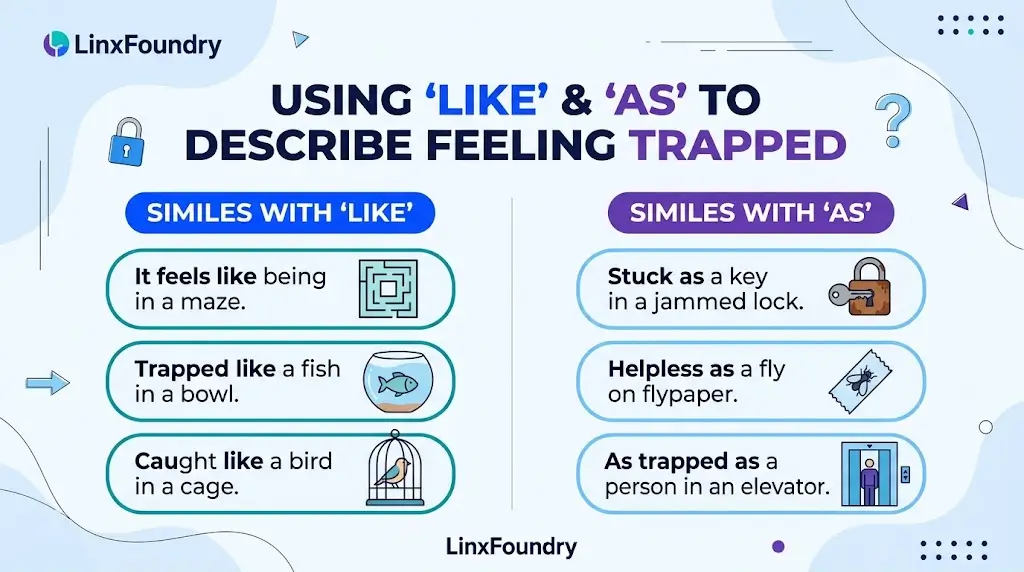
Similes using “like”
- He felt like a bird in a cage, longing to spread his wings.
- She moved through her routine like a runner on a treadmill, always busy but never closer to her goal.
- His thoughts circled like a fly trapped inside a jar, unable to find an exit.
Similes using “as”
- She felt as confined as a bird behind cage bars.
- He was as stuck as a car buried in deep mud.
- They felt as helpless as swimmers caught in a powerful current.
Both structures can create effective comparisons. Choose the version that sounds most natural in the surrounding sentence.
Tips for Creating Your Own Similes About Feeling Trapped
You do not have to rely on familiar expressions. You can create an original simile by identifying the kind of restriction you want to describe and finding a concrete image that behaves in a similar way.
- Identify the feeling. Is the character frightened, frustrated, powerless, isolated, or exhausted?
- Identify the restriction. Are they facing a closed door, a difficult responsibility, a confusing problem, or a lack of control?
- Choose a matching image. A locked gate suggests restricted access, while tangled roots suggest difficulty growing.
- Add “like” or “as.” Connect the emotion to the image in a natural sentence.
- Check the meaning. Make sure readers can understand the connection without a lengthy explanation.
For example, if a character feels unable to express their ideas, you might write, “Her thoughts were like birds pressing against a closed window.” The image suggests that the thoughts are alive and ready to escape, but something stands in their way.
Avoid adding several similes to the same sentence. One precise comparison often creates a stronger impression than a paragraph crowded with competing images.
FAQ: Similes for Feeling Trapped
1. What is a good simile for feeling trapped?
A good simile is “like a bird in a cage.” It describes someone who wants freedom but cannot escape their restrictions. For a more emotional comparison, try “like a prisoner of their own thoughts.”
2. What is a powerful simile for feeling trapped?
“Like a plant growing beneath concrete” is a powerful simile for someone whose potential is restricted by their circumstances. It suggests that the person wants to grow but lacks the space or opportunities needed to flourish.
3. What is a simile for feeling stuck in life?
“Like a runner on a treadmill” works well for someone who keeps trying but makes little progress. It captures the frustration of putting in effort without reaching a meaningful destination.
4. How do you describe feeling trapped in a relationship using a simile?
You could write, “She felt like a bird in a cage, longing for a freedom she could no longer remember.” This comparison suggests restricted choices and a desire for independence without making assumptions about every difficult relationship.
5. What is a simple simile for feeling trapped for students?
“Like a mouse in a maze” is a simple option. It describes someone who feels lost and cannot find a way out. Students can use it in stories about difficult decisions, confusing situations, or challenging problems.
6. Can similes for feeling trapped be used in poetry?
Yes. Similes can make emotional experiences more concrete and memorable. For example, “My hopes were like seeds beneath a stone” suggests that hope remains present even when circumstances prevent growth. In poetry, choose images that fit the poem’s mood and rhythm.
7. What is the difference between feeling trapped and feeling stuck?
Feeling trapped usually emphasizes restricted freedom or the inability to escape. Feeling stuck often emphasizes a lack of progress or difficulty moving forward. The meanings overlap, so a bird in a cage may describe feeling trapped, while a car spinning its wheels in mud may better describe feeling stuck.
Final Thoughts
Similes for feeling trapped help turn an abstract emotion into an image readers can picture. A bird in a cage conveys restricted freedom, a runner on a treadmill suggests exhausting repetition, and a plant growing beneath concrete represents potential held back by difficult circumstances.
When choosing a comparison, consider what creates the feeling of confinement. Is it a lack of freedom, a complicated problem, overwhelming pressure, or the inability to move forward? Select a simile that reflects that specific struggle. You can also create your own by connecting the feeling to an object or situation with a similar limitation. The most effective comparison is one that makes the emotion clearer without distracting from the story.

Emily Carter
Emily Carter specializes in word choice, writing clarity, vocabulary development, and practical English usage. Her articles explain similar words, highlight differences in meaning, and provide examples to help readers communicate more naturally and confidently.